
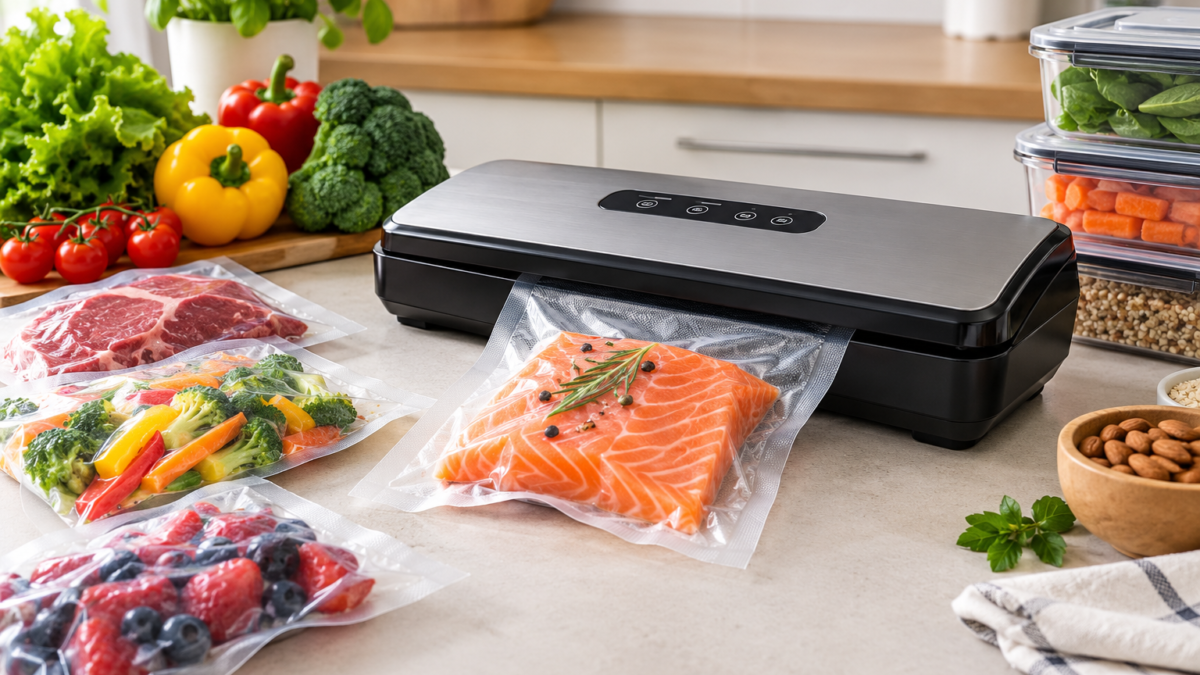
Food waste is a common challenge in Australian households. Fresh produce, meat, seafood and leftovers can lose their quality when stored incorrectly, leading to unnecessary waste and additional grocery expenses. A more organised approach to food storage can help households preserve food quality, manage portions and make better use of their weekly shopping.
A food vacuum sealer offers a practical way to improve food storage by removing air from specially designed bags before sealing them. When combined with appropriate refrigeration or freezing, this process can help maintain food quality and reduce exposure to air. Understanding how vacuum sealing works and when to use it can make everyday meal preparation more efficient.
What Is a Food Vacuum Sealer and How Does It Work?
A food vacuum sealer is a kitchen appliance that removes air from a compatible storage bag or container and seals it to create an airtight package. Reducing the air surrounding food helps limit oxidation, which can affect colour, flavour and texture.
Vacuum sealing is particularly useful for foods stored in the freezer, where suitable packaging can help reduce freezer burn caused by exposure to air. It also allows households to divide bulk purchases into smaller portions that are easier to store and use.
However, vacuum sealing does not sterilise food or eliminate all harmful microorganisms. Perishable items must still be stored at the correct temperature and handled according to food safety recommendations.
5 Practical Ways to Use Vacuum Sealing at Home
1. Store Meat and Seafood More Effectively
Buying meat and seafood in larger quantities can be convenient, but storing everything in its original packaging may not be ideal for long-term freezing. Dividing purchases into meal-sized portions and vacuum sealing them can help reduce exposure to air and minimise freezer burn.
Label each package with its contents and packing date before placing it in the refrigerator or freezer. Keep raw meat and seafood separate from ready-to-eat foods to prevent cross-contamination.
2. Preserve Seasonal Fruit and Vegetables
Seasonal produce can be purchased in larger quantities when prices are favourable. Depending on the type of produce, vacuum sealing may help maintain quality when freezing prepared portions.
Wash and prepare vegetables as appropriate for freezing, and blanch those that benefit from this process. Delicate or easily crushed produce may require alternative storage methods or suitable containers rather than direct vacuum sealing.
3. Organise Meal Preparation
Meal preparation becomes easier when ingredients are portioned ahead of time. For example, marinated meat, prepared vegetables and individual meal components can be packed separately for convenient use throughout the week.
Choose bags suitable for the intended storage conditions and follow the appliance manufacturer’s instructions. Keep refrigerated foods cold, and freeze portions that will not be used within a suitable refrigerated storage period.
4. Protect Dry Pantry Ingredients
Foods such as nuts, coffee beans, grains and dried ingredients can be affected by moisture, air and exposure to contaminants. Vacuum sealing compatible dry foods can help maintain their quality when used with appropriate food-safe packaging.
Store sealed packages in a cool, dry place away from direct sunlight. For ingredients that are sensitive to crushing, use a suitable container or a gentle sealing setting if your appliance provides one.
5. Make Better Use of Leftovers
Vacuum sealing suitable leftovers can make portion control and freezer organisation more convenient. Divide cooked food into smaller portions, cool and refrigerate it promptly, and label each package clearly.
Do not leave cooked food at room temperature for extended periods. Vacuum sealing does not make leftovers safe indefinitely, so follow recognised food safety guidance and use appropriate storage times.
What Should You Consider When Choosing a Vacuum Sealer?
Selecting the right appliance depends on your cooking habits, available storage space and the types of food you regularly prepare.
Consider these factors before purchasing:
- Sealing performance: Look for reliable sealing and vacuum extraction suited to your intended use.
- Bag compatibility: Check whether the appliance requires specific embossed bags, rolls or compatible containers.
- Moist and dry settings: Different food textures and moisture levels may require different operating modes.
- Ease of cleaning: Removable drip trays and accessible sealing areas can make maintenance simpler.
- Storage and convenience: Compact designs, built-in cutters and straightforward controls may be useful for everyday kitchens.
Explore the available food vacuum sealers to compare options and find an appliance that suits your household’s food storage requirements.
How to Use Vacuum Sealing Safely
Food safety should remain a priority, regardless of the packaging method. Vacuum sealing reduces oxygen inside a package, but some harmful bacteria can grow in low-oxygen conditions.
Follow these essential practices:
- Keep refrigerated perishable food at 5°C or colder.
- Freeze food promptly when it is intended for longer-term storage.
- Use clean equipment and food-safe packaging.
- Keep raw and ready-to-eat foods separate during preparation.
- Label packages with the food name and date.
- Follow the manufacturer’s instructions for foods that should not be vacuum sealed.
For additional guidance, consult Food Standards Australia New Zealand’s food storage recommendations.
Is a Food Vacuum Sealer Worth Having?
For households that regularly buy food in bulk, prepare meals ahead of time or freeze seasonal ingredients, a vacuum sealer can be a useful addition to the kitchen. It helps organise portions, reduce air exposure and make freezer storage more manageable.
The best results come from combining suitable packaging with good food handling, accurate labelling and correct storage temperatures. Choosing an appliance that matches your routine can make these practices easier to maintain.
If you want to simplify food storage and make better use of your groceries, visit Food Vacuum Sealers Australia to explore available solutions for your kitchen.