Almost everyone has heard the advice to drink eight glasses of water a day. It is easy to remember and sounds reasonable, but the truth is a little more flexible. Your ideal intake depends on your body, your surroundings and what you do all day.
Why water matters
Water makes up a large share of your body weight, and nearly every system relies on it. It carries nutrients through the blood, helps regulate temperature through sweat, cushions the joints and keeps the digestive system moving. Even the brain works better when it is properly hydrated. Water also helps the kidneys flush out waste products, and it keeps the skin and the lining of the mouth and eyes comfortably moist.
When fluid levels drop, the body compensates by conserving what it has. You may feel tired, get a mild headache, struggle to concentrate or notice that your mouth feels dry. These changes are subtle, which is why many people walk around slightly dehydrated without realising.
So how much is enough?
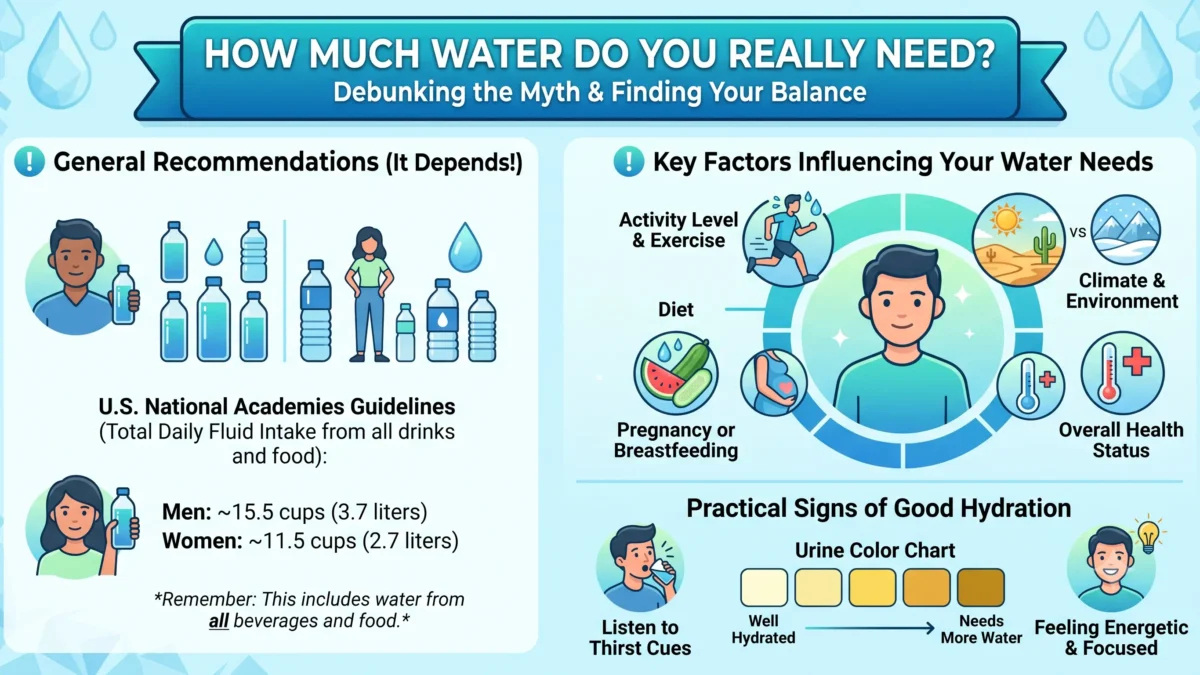
There is no single number that suits everyone. Health authorities often suggest roughly two litres of total fluid a day for women and a little more for men, but that figure includes water from all drinks and from food. Fruits, vegetables, soups and yoghurt all contribute. In many diets, around a fifth of daily fluid comes from what we eat.
Several things push your needs up:
- Hot or humid weather, which increases sweating.
- Exercise, especially long or intense sessions.
- Illness involving fever, vomiting or diarrhoea.
- Pregnancy and breastfeeding.
- High altitude, where you breathe faster and lose more moisture.
Older adults deserve a special mention. The sense of thirst becomes less reliable with age, so it helps to drink regularly even when you do not feel thirsty.
Reading your body’s signals
You do not need an app to know whether you are drinking enough. Your body gives you clear clues.
Thirst is the obvious one, but urine colour is even more helpful. Pale straw yellow usually means you are well hydrated. Dark amber suggests you need more fluid. Very clear, colourless urine all day long can mean you are drinking more than necessary, which is rarely a problem but not a goal in itself.
Other signs of low hydration include dry lips, dizziness when standing up quickly, infrequent trips to the bathroom and unusual tiredness.
Easy ways to drink more
If plain water bores you, you are not alone. A few small tricks can make hydration feel effortless.
Start the day with a glass. After hours without drinking, your body welcomes it, and it builds a habit that carries through the day.
Pause before snacking. Thirst is easily mistaken for hunger, so try a glass of water first.
Keep a bottle in sight. People drink more when water is within reach. A bottle on your desk or in your bag works as a gentle reminder.
Add flavour naturally. Slices of lemon, cucumber, mint or berries make water more appealing without adding sugar.
Link it to routines. Have a glass with each meal and another when you finish a task or take a break.
Eat your water. Watermelon, oranges, cucumber, tomatoes and leafy greens all boost your intake while giving you vitamins and fibre.
Tea, coffee and milk count towards your total as well. Moderate amounts of caffeinated drinks do not dehydrate you in any meaningful way, though sugary drinks are best kept occasional.
Can you drink too much?
It is rare, but possible. Drinking enormous amounts in a short time can dilute the body’s salt levels, a condition that can be dangerous. This is most likely during endurance events or when someone forces down fluid far beyond thirst. For everyday life, sipping steadily and responding to thirst is perfectly safe.
A simple takeaway
Instead of counting glasses, pay attention to your body. Drink when you are thirsty, make water an easy choice, and adjust on hot days or busy training days. If you have a medical condition affecting your kidneys or heart, check with your doctor, because some people are given specific fluid limits. For everyone else, good hydration is less about discipline and more about small, steady habits.