Most people know that cakes, sweets and fizzy drinks are full of sugar. The trickier problem is the sugar we never see coming. It slips into foods that taste savoury or look wholesome, and it adds up quickly over a day.
Why too much sugar matters
Sugar itself is not poison. Our bodies use sugar from fruit, grains and vegetables as fuel. The trouble starts with free sugars, meaning those added to food and drink, as well as the sugars in honey, syrups and fruit juice. Health bodies generally advise keeping free sugars below about ten per cent of daily energy, with a lower target being even better.
Consuming more than that is linked with weight gain, tooth decay and a higher risk of type 2 diabetes and heart disease. Sugary foods also tend to be easy to overeat. They are rarely filling, so the energy arrives without the fibre or protein that tells your body it has had enough.
Surprising places sugar hides
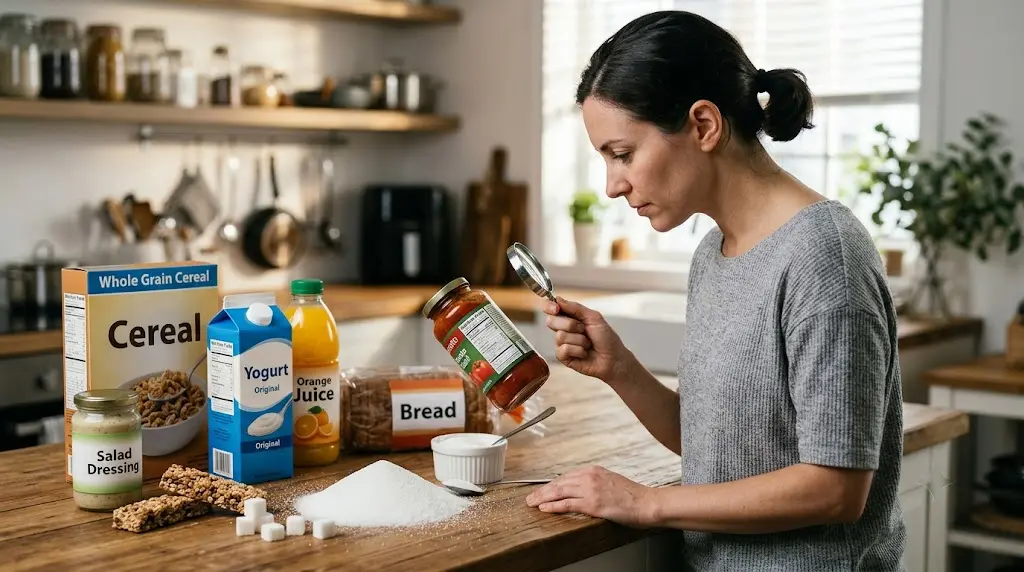
You might expect sugar in biscuits. It is less obvious in these everyday items:
- Pasta sauces and tomato ketchup. Sugar softens acidity and improves flavour.
- Breakfast cereals, including many marketed as healthy or high in fibre.
- Flavoured yoghurts. A small pot can contain as much sugar as a dessert.
- Granola and cereal bars. Oats and nuts can be coated in syrup.
- Salad dressings and marinades.
- Bread, especially sliced, packaged varieties.
- Plant-based milks, where sweetened versions are common.
- Fruit juices and smoothies. Even without added sugar, juicing releases the sugars from the fruit and removes most of the fibre.
- Soups and ready meals.
How to read a label
The nutrition panel is your best friend. Look at the line for sugars, ideally per 100 grams. As a rough guide, more than 22.5 grams of total sugar per 100 grams is considered high, while 5 grams or less is considered low. Keep in mind that this figure may include natural sugars from milk or fruit.
The ingredients list gives further clues. Ingredients are listed from largest to smallest, so if sugar appears near the top, the product is mostly sugar. Manufacturers often use many different names for it. Look out for glucose, fructose, dextrose, maltose, sucrose, syrups of various kinds, honey, molasses and concentrated fruit juice. If several of these appear, the sugar content may be higher than it first looks.
Practical ways to cut back
Going cold turkey is rarely sustainable. Gradual changes work much better.
Swap the drinks first. Sweetened drinks are the easiest place to cut because they provide lots of sugar without making you feel full. Try water, sparkling water with fruit, or unsweetened tea.
Choose plain and add your own flavour. Buy unsweetened yoghurt and stir in fresh fruit or a sprinkle of cinnamon. Plain porridge oats with berries beat most sweetened cereals.
Cook from scratch when you can. A simple tomato sauce takes minutes and puts you in charge of what goes in.
Reduce the sugar you add yourself. If you take sugar in tea or coffee, cut the amount slightly each week. Taste buds adapt within a few weeks.
Pair sweet with protein or fibre. Fruit with a handful of nuts keeps you satisfied for longer than fruit alone.
Keep treats as treats. You do not have to give up dessert. Enjoying a small portion mindfully is better than denying yourself and then overindulging.
What about sugar substitutes?
Alternative sweeteners may reduce sugar intake in the short term, but they do not teach your palate to enjoy less sweetness. Many experts suggest using them as a stepping stone rather than a permanent answer.
Progress, not perfection
Small swaps repeated daily add up far more than occasional big efforts. Hidden sugar is not a reason to fear food or to read every label with suspicion. It is simply good to know where it lurks. Pick one or two habits from this list, such as swapping a sweet drink or choosing plain yoghurt, and build from there. A few small changes, kept for months, will do more for your health than a strict plan abandoned after a week. Your taste buds will adjust, and sugary snacks aimed at children deserve extra attention.