Feeling lonely is a universal human experience. Almost everyone has felt it at some point, whether after moving to a new place, losing someone dear or simply drifting apart from friends. When it passes quickly, it is just part of life. When it lingers, it can affect health in ways many people do not expect.
Lonely is not the same as alone
It helps to separate two ideas. Being alone describes your circumstances. Loneliness describes how you feel about them. Some people live on their own and feel perfectly content, while others sit in a crowded room and feel deeply isolated.
Loneliness arises when the connections we have do not match the connections we want. It can come from the quantity of relationships, but just as often from their quality. A person with many acquaintances may still long for someone who really knows them.
How loneliness can affect your health
Humans evolved in groups, so our bodies treat social isolation as a kind of threat. Over time, ongoing loneliness is linked with higher stress hormones, disturbed sleep and raised blood pressure. Studies have also associated long-term isolation with an increased risk of heart disease, depression, anxiety and cognitive decline in later life.
Loneliness can also change behaviour. People who feel disconnected may move less, eat less well, drink more or avoid medical appointments. And because loneliness can make us more sensitive to rejection, it sometimes creates a cycle: we withdraw to protect ourselves, which leaves us even more isolated.
This does not mean that loneliness is a personal failing. It is a signal, similar to hunger or thirst, telling us that a basic need is not being met.
Who is most at risk?
Anyone can feel lonely, but certain times of life carry extra risk. Young adults leaving home or starting new jobs, new parents, people who have recently retired, those caring for a relative and anyone dealing with illness, disability or bereavement often find their social circle shrinking.
Steps that help
Building connection takes time, and it is fine to begin modestly.
Reach out to one person. Send a message to an old friend or neighbour. Most people are happy to hear from you, even if it feels awkward to make the first move.
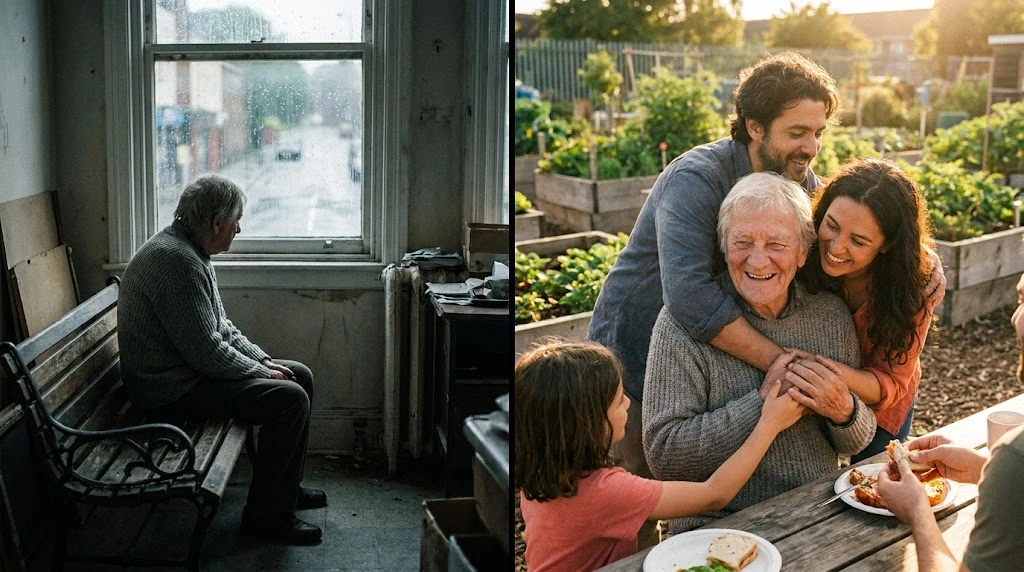
Join something regular. Clubs, classes, volunteer groups, community gardens, walking groups and faith or interest-based gatherings all create repeated contact. Familiar faces turn into friendships more easily when you see them every week.
Give your time. Volunteering gives you a sense of purpose and puts you alongside people with shared values. Helping others is one of the surest ways to feel less alone.
Make small talk count. A chat with a shopkeeper, a wave to a neighbour or a friendly word at the park may seem tiny, but these light interactions add up to a sense of belonging.
Deepen what you already have. Replace a quick text with a phone call, or suggest a walk instead of a message. Being a little more open invites others to do the same.
Use technology wisely. Video calls and group chats can keep distant relationships alive. However, scrolling through other people’s lives rarely replaces real conversation, so favour tools that help you talk to people over those that make you watch them.
Being kind to yourself
If you feel lonely, try to avoid harsh self-judgement. Negative thoughts such as “nobody wants me around” tend to feel true when we are low, but they are often not accurate. Treat yourself as you would a friend in the same position. Gentle patience helps far more than criticism.
When to seek support
If loneliness is heavy, lasts for weeks or comes with persistent sadness, loss of interest, trouble sleeping or thoughts of hopelessness, please talk to your doctor or a counsellor. Talking therapies can be very effective, and many communities offer free support services and helplines. If you are ever in crisis or thinking about harming yourself, contact your local emergency number or a crisis line right away.
A final thought
Connection is not a luxury. It is part of how people stay healthy. Choose one small step today, whether a message, a call or a hello to a neighbour.