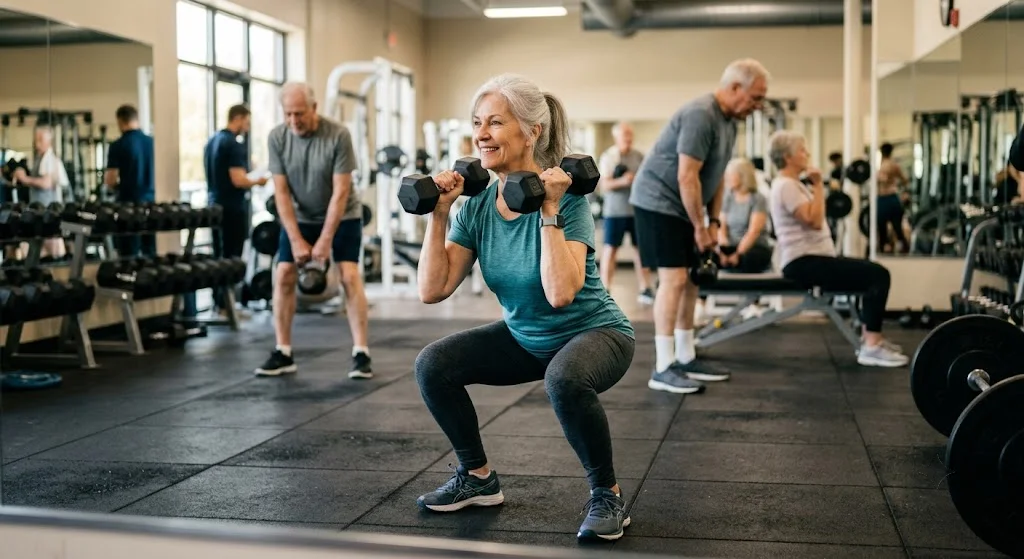
Many people think of lifting weights as something for athletes or young gym-goers. In truth, strength training is one of the most valuable things anyone can do for long-term health, and its importance grows with each passing decade.
The slow loss of muscle
From around our thirties, we begin to lose muscle mass gradually unless we work to maintain it. This process, known as sarcopenia when it becomes significant, speeds up in later decades. Less muscle means less strength, slower walking, more difficulty climbing stairs and a greater risk of falls and fractures.
The consequences extend beyond the physical. Strength is closely tied to independence. Being able to rise from a chair, carry shopping, play with grandchildren or recover from an illness depends heavily on muscle. The encouraging part is that muscle responds to training at nearly any age. Studies have shown meaningful gains in people in their eighties and nineties.
Benefits beyond big muscles
Strength training does far more than build strength.
Stronger bones. Muscles pull on bones during exercise, which encourages them to stay dense. This is particularly valuable for reducing the risk of osteoporosis.
Better blood sugar control. Muscle is a major user of glucose, so building it supports healthy metabolism.
Healthy weight. More muscle raises the energy your body uses even at rest.
Joint support. Strong muscles act like shock absorbers, easing pressure on knees, hips and the spine.
Improved balance. Leg and core strength help you stay steady and recover from a stumble.
Mood and sharper thinking. Resistance exercise has been linked with better mood, improved sleep and benefits for memory and attention.
How much do you need?
Health guidelines suggest working all major muscle groups at least twice a week. Sessions can be as short as twenty to thirty minutes. You do not need to train every day, and rest between sessions is when your muscles recover and grow.
Getting started safely
You can begin at home with no equipment at all. Bodyweight movements work every major muscle group:
- Sit-to-stand squats from a sturdy chair, building leg and hip strength.
- Wall or incline push-ups for the chest, shoulders and arms.
- Glute bridges lying on your back, for hips and lower back.
- Standing rows with a resistance band, for the upper back.
- Calf raises while holding a counter for balance.
- Planks from your knees or toes to strengthen the core.
Start with one set of eight to ten repetitions of each, and aim to add a second set after a couple of weeks. When it becomes easy, increase the challenge by using bands, dumbbells, or even filled water bottles or tins of food. The last few repetitions should feel hard but not painful.
Technique and progression
Good form matters more than heavy weight. Move slowly and steadily, breathe out as you lift and avoid holding your breath. Keep your back neutral and avoid jerking movements. If you are new to training, one or two sessions with a qualified instructor can teach you the basics and give you confidence.
Progress gradually. Add a little more weight or a few more repetitions when the current level feels comfortable. Mild muscle soreness a day or two after training is normal. Sharp pain, joint pain or dizziness is not, and you should stop and seek advice.
Fuel and recovery
Muscles need building blocks, so include protein at each meal. Good sources include eggs, fish, poultry, dairy, beans, lentils, tofu and nuts. Older adults often benefit from a little more protein than younger people, but check with a doctor or dietitian if you have kidney problems. Alongside food, aim for quality sleep and sensible rest days.
Talk to your doctor first if needed
Most people can start gentle strength work safely. However, if you have heart disease, uncontrolled high blood pressure, recent surgery, significant joint problems or any other medical concern, check with your doctor before beginning.
It is never too late
You do not need a gym membership or impressive goals to benefit. Pick two days this week, choose three or four movements and try them. Over a few months, everyday tasks will begin to feel lighter. Strength is about staying capable, confident and independent for as many years as possible.