
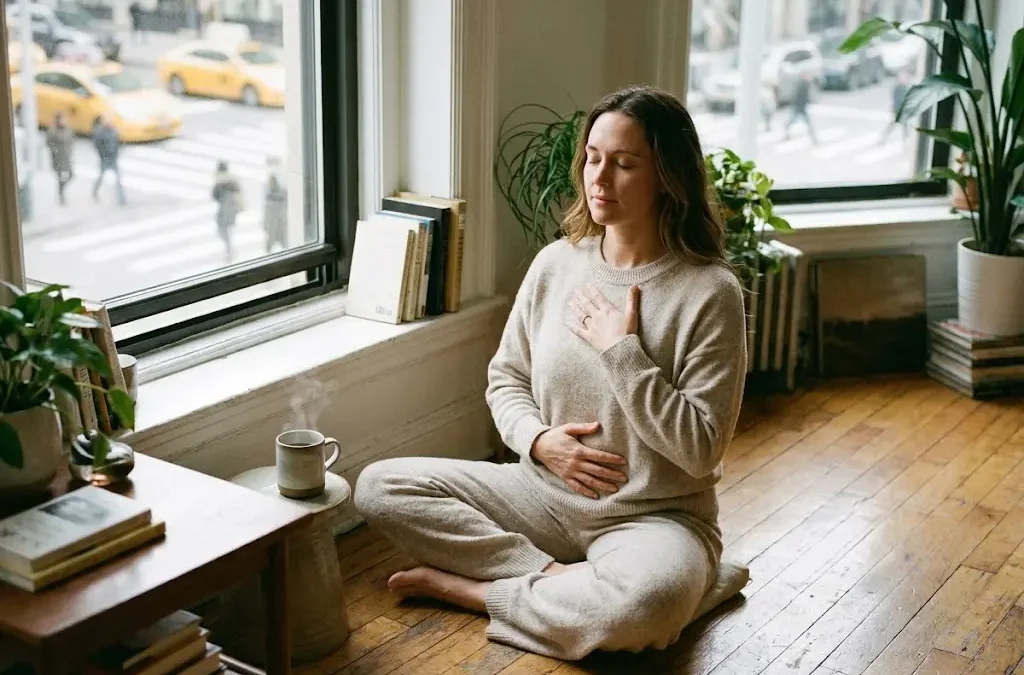
When life speeds up, breathing tends to speed up with it. Many of us spend whole days taking quick, shallow breaths without noticing. The good news is that the reverse also works. By slowing the breath on purpose, you can send a calming message to the whole body.
Why breathing affects how you feel
Your nervous system has two main modes. One is the alert, ready-for-action state, sometimes called fight or flight. The other is the rest and recovery state. Most of the time these shift automatically, but breathing is unusual because it is both automatic and something you can control by choice.
When you breathe out slowly and fully, your heart rate tends to drop and your body shifts towards the calmer mode. That is why a long exhale feels like a sigh of relief. Regular practice may also improve how flexibly your heart responds to stress, a quality linked with better resilience.
Signs that your breathing needs attention
Stress often shows up in the breath long before we notice it in our thoughts. Common clues include a tight chest, shoulders that creep up towards the ears, frequent sighing or yawning, and the sense that you cannot quite take a satisfying breath. Some people catch themselves holding their breath while reading emails or concentrating on a screen.
If you notice any of these, take it as a cue to pause rather than a sign that something is wrong.
Three simple techniques
You do not need any equipment or a quiet room. Try these in a chair, on the bus or in a waiting room.
Belly breathing
Place one hand on your stomach and the other on your chest. Breathe in slowly through your nose, letting your belly rise while your chest stays fairly still. Breathe out gently through your nose or mouth and feel the belly soften. Continue for two to five minutes. This pattern uses the diaphragm, the large muscle beneath your lungs, which is the most efficient way to breathe.
Extended exhale
Breathe in for a count of four. Breathe out for a count of six or eight. The longer exhale is the key. Repeat for about ten breaths. If counting feels fussy, simply aim to make the out-breath noticeably longer than the in-breath.
Box breathing
Imagine tracing the sides of a square. Breathe in for four counts, hold for four, breathe out for four, and hold for four. Repeat for a few minutes. Many people like it for its steady rhythm, and it gives a busy mind something precise to follow. If holding the breath feels uncomfortable, shorten the pauses or skip them.
Building the habit
Breathing exercises work best when they become routine rather than emergency measures. A few ideas:
- Practise for two minutes after waking, before you reach for your phone.
- Take three slow breaths before meals.
- Use red traffic lights or a waiting kettle as reminders.
- Wind down with five slow minutes before bed, which can ease the journey into sleep.
Consistency matters more than length. A short daily practice beats a long session once a month.
What to expect, and what not to expect
Slow breathing is a helpful tool, not a cure for everything. It can take the edge off stress, steady nerves and improve focus, but it will not remove the cause of ongoing pressure or replace treatment for anxiety, depression or panic. If you feel overwhelmed most days, struggle to function or have persistent worries, please speak to a doctor or a mental health professional. Support is available, and asking for it is a sign of strength.
A word of caution as well: if you ever feel dizzy or tingly, return to normal breathing and take a rest. Gentle, comfortable breaths are the aim. Forcing the breath or breathing too deeply and too fast can make you feel worse.
Try it right now
Put down whatever you are holding. Drop your shoulders. Breathe in gently through your nose, then let a long, slow breath leave your body. Do that five more times. Notice whether your jaw, hands or stomach feel any softer. That small shift is available to you at any moment, and it costs nothing at all.